From Mendi Place to the Farm:
Tree Transplant for Butler Park Homes
Butler Park sits at the corner of Mendi Place and Goiri Street in Kuna. Most homes around it date to the mid-1970s. Their yards have had about fifty years to fill in, or thin out. Searching for tree transplant Butler Park help? This page covers picking, moving, and caring for a tree on one of these older lots.
Our trees are field-grown on orchard ground at our farm on Lake Shore Dr in Nampa. Most are 5 to 10 years old when we dig them. You start with a tree that already casts some shade, not a skinny sapling you wait a decade on.
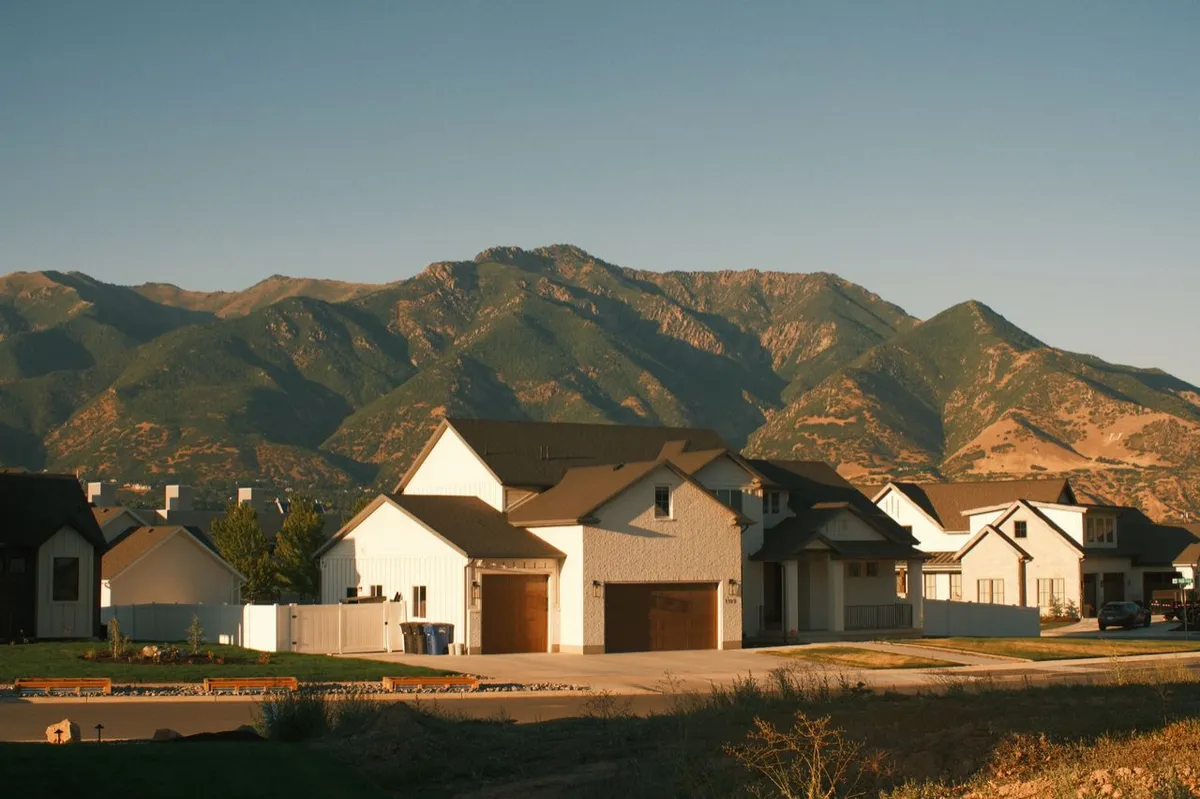
Butler Sunview Estates is made up mostly of single-level homes on lots of about 7,400 to 9,600 square feet. That leaves room for a real shade tree, with space to spare. One spot needs extra care: the strip between the sidewalk and the street falls under ACHD right-of-way rules. We cover what that means below.
Our tree farm sits across the county line in Canyon County, about 23 minutes from the park. That short drive lets you choose your tree in person. We move trees while they're dormant, from October into spring. Call us to check fall transplant availability before your ground freezes.
Butler Sunview Yards Are Ready for a New Tree
If you own a home on Mendi Place or Goiri Street, walk your yard with fresh eyes. Homes here went up between 1975 and 1977, so some yard trees may be nearly as old. Some are now fading, dropping limbs, or leaving bare patches in the lawn. Other corners never got a tree at all and bake all through July.
Some yards have the opposite issue. A tree that started small decades ago may now press against the eaves or shade the whole backyard. Before you cut it down, give us a call. Sometimes moving it to a better spot on your lot works. Other times, a fresh tree in a new spot makes more sense.
Most lots here can fit a full-size shade tree. Several homes also list RV parking along the side, and a tree has to clear that lane. That's why the spot comes first and the species comes second.
We help you choose where the tree goes. Together, we look at:
- Distance from the house, roofline, and driveway
- Where afternoon shade will land in midsummer
- How wide the canopy will spread at full size
- A clear lane for your RV or trailer, if you have one
Getting the spot right the first time means the tree never has to move again.
Choose a Tree That Handles
Kuna Soil and West Wind
Start with the ground. Kuna's urban forestry guide says soils here can be highly variable. It notes that poor drainage, whether too much or too little, is a common reason trees decline. One yard on your block may hold water while the next one dries out fast.
Soil in Kuna also tends to run alkaline, which means a high pH. Some trees turn yellow and stall in that ground. The city's guide points to honey locust as a tree widely planted in Kuna because it stands up to high-pH soil. It even names Sunburst as one of the cultivars that do well here.
That's one we grow. Sunburst Locust is a thornless honey locust with golden new growth in spring. Like every tree in our field, it has spent years rooted in the same kind of alkaline soil you have at home.
Wind is the other test. Winds in the Treasure Valley mostly blow from the west and northwest. The windiest stretch runs from March to mid-May. A tree with a straight trunk and evenly spaced branches rides out those days better. When you visit, ask us which trees in our rows have the sturdiest structure.
The city's guide also suggests picturing your planting spot 10 to 15 years ahead. Before you choose, ask yourself:
How tall will this tree get?
How wide will the canopy spread?
Will it still clear your roof and driveway?
A tree that fits at full size saves you from fighting with it later.
Prep Your Lot Before Transplant Day
Several recent Butler Sunview listings note no HOA or CCRs, so you may have no review board to wait on. Check your own deed and Kuna city rules before you count on that. Once you're clear, the rest of the prep is simple.
Look up first. Kuna's tree guide allows only small trees under overhead power lines or within 10 feet of them. A tree that will top 40 feet needs open sky.
Then look down. Before any digging, call 811. Idaho law requires at least two business days' notice. Locators mark buried lines with paint or flags, and the service is free
Your prep checklist:
Call 811 and wait for the marks.
Clear a path from the street to the planting spot.
Move trailers, toys, and yard gear out of the way.
Ask us what access your yard needs. Our larger tree spades ride on semi-trucks.
Watering setups vary on these lots. Recent listings show both automatic and manual sprinkler systems, and many have irrigation water available. Whatever you have, plan how the new tree gets watered before it arrives.
The street strip has its own rules. It falls under ACHD
right-of-way, and Kuna's guide does not allow thorned honey locust or conifers there. The guide also calls for at least 7 feet between the sidewalk and the street. Planting inside your own yard is far simpler.
Getting from Butler Park to the Farm
Pictures can't show you how a trunk tapers or how a crown is balanced. At the farm, you can stand next to the tree before it's dug. For something you'll live with for decades, that visit is worth it.
From Butler Park, you head west out of Ada County and into Canyon County. The drive takes about 23 minutes and covers about 14.7 miles. Our farm sits on the south side of Lake Lowell.
Here's the route:
- From Butler Park, follow Goiri Street to W Boise Street and turn left.
- Turn right onto N Linder Avenue. At the traffic circle, take the first exit onto W Main Street.
- Stay on that road as it becomes Bridge Avenue, then Avalon Street, then W Kuna Road. Follow W Kuna Road about 3 miles.
- Turn right onto Robinson Road, then left onto Deer Flat Road. Go straight through the next traffic circle.
- Turn right onto S Powerline Road, then left onto Emerald Road, which becomes Lake Shore Drive.
- Follow Lake Shore Drive about 5.4 miles as it curves along the water. Our farm is on the left.
When Lake Lowell opens up beside the road, you're almost here. Call ahead so someone can meet you in the field.

Fall and Early Spring Work Best for
Kuna Transplants
If your family lives near School Avenue or Deer Flat Road, plan around dormancy. We move trees while they're dormant, so our busy season runs from October into April or May. A dormant tree isn't pushing new leaves, so it handles the move with less stress.
Winter doesn't have to stop the job. We keep transplanting through the cold months as long as the ground isn't frozen. It also can't be too muddy for our trucks. That gives you more room to plan than a short fall window would.
Calm weather matters on the day itself. Wind advisories for this part of the valley have called for gusts up to 45 mph. A still day is a better day to set a tree.
Here's how transplant day goes:
We visit first. We look at your yard and the spot you picked.
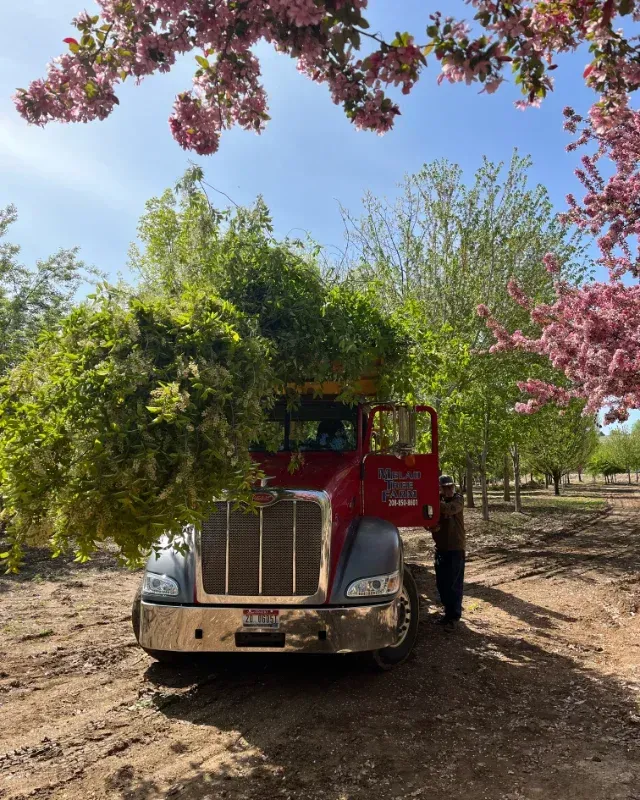
The spade does the lifting. A truck-mounted tree spade lifts the tree with a deep cone of soil around its roots.
It goes in at grade. The trunk flare sits level with your yard. Kuna's guide prohibits setting trees in low, recessed spots.
We go over care with you. You'll know what the next few weeks should look like.
We serve Kuna and other Treasure Valley communities from our farm in Nampa. Ask about delivery to your street when you call, and we'll talk through access and timing.
First-Year Care Keeps Your Tree Standing Strong
Your tree's first year decides how well it settles in. Near Kuna and Lake Lowell, the roots need to spread before summer heat sets in. On this side of the Treasure Valley, summer days regularly hit the low 90s. We get only around 11 inches of rain a year.
Water deeply and slowly. A quick spray wets the surface and stops there. A slow soak reaches the root ball and draws roots downward, which helps anchor the tree.
Test the soil with your fingers before the next watering. It should feel like a wrung-out sponge, not mud. Clay-rich ground drains slowly, so overwatering can drown roots as easily as drought dries them.
If your sprinklers run on a timer, your lawn schedule may not be enough for a new tree. On a manual system, a phone reminder keeps you consistent.
After any strong west or northwest wind, walk out and check:
Are the stakes still firm in the ground?
Are the ties snug without biting into the bark?
Is the trunk still standing straight?
Fix a small lean right away. It's an easy correction early and a hard one later.
Questions come up in that first year, and that's normal. If leaves yellow, droop, or drop early, call us and describe what you see.
Frequently Asked Questions
Trees are serious, and so are your questions. Here are just a few:
Can I plant in the street strip on Mendi Place?
Maybe, but that strip falls under ACHD right-of-way rules, so check before you dig. Kuna's guide does not allow thorned honey locust or conifers there. It also calls for at least 7 feet between the sidewalk and the street. Your own yard has far fewer limits.
Do Butler Sunview homes need HOA approval?
Probably not, since several recent Butler Sunview listings note no HOA or CCRs. Still, confirm with your own deed and Kuna city rules before you plant.
Can we hold a tree-planting get-together at Butler Park?
You can gather at Butler Park, but the planting itself needs to happen in your own yard. The park is open dawn to dusk and works on a first-come, first-served basis. You can rent extra tables for larger events through the city's parks catalog. Guests will find a playground, swings, picnic tables, and one covered seating area.
When is the best time to transplant in Kuna?
The best time is while trees are dormant, from October into spring. We can keep working through winter as long as the ground isn't frozen or too muddy. Avoid windy days, especially in the gusty stretch from March to mid-May.
How do I protect a new tree from the west wind?
Stake it at planting and recheck the stakes after every big wind. Keep the ties snug but loose enough to protect the bark. Straighten any lean as soon as you spot it.
How long is the drive from Butler Park?
The drive takes about 23 minutes and covers about 14.7 miles. You head west through Kuna and finish along Lake Shore Drive on the south side of Lake Lowell.
COMPANY
CUSTOMER CARE
LOCATIONS
NEWS
LEGAL


© Copyright 2026. Melad Tree Farm. All Rights Reserved.