Tree Farm Near Danskin Ridge, Meridian: Worth the Drive
from Your Acre
Your lot in Danskin Ridge gives you room and a wide open sky.
It also gives you very little shade. On three-quarters of an acre or more, one small tree does not go far. The fence line stays bare and the afternoon sun keeps coming.
Most homes here went in between 2001 and 2006.
Twenty years on, the first round of builder trees is showing its age.
Some topped out small. Others are thinning, leaning, or already gone.
This page covers what a tree farm Danskin Ridge Meridian homeowners can drive to actually offers. We grow our trees in the open field, not in pots on a lot.
Most are five to ten years old when they leave us. You get real size the day it goes in the ground.
Distance matters more than people expect.
A shorter haul means less time with the roots out of the ground.
The drive from your neighborhood crosses out of Ada County and into Canyon County. Less time in transit is easier on the tree.
You have two ways to bring one home.
You can pick up smaller stock yourself with a trailer.
Or our crew can haul the tree out and plant it on your lot.
Call us first to see what is dug and ready this week.
Danskin Ridge Lots Need Trees That Handle Wind and Open Ground
Look down your fence line. On most acreage lots here, there is nothing to slow the wind and nothing to break the sun. A young tree from a pot will take years to change that.
The neighborhood does have a common area at its center, with walking paths toward Silver Trail Elementary. Your own lot is a different matter.
Danskin Ridge sits on the southwest edge of Meridian, off Columbia Road. Past the last blocks of town, farm ground runs flat for miles. Wind picks up speed with nothing standing in its way. A gust that barely moves a tree downtown can lean hard on your yard.
The ground works against you too. Soil out here is often clay-heavy and packed down tight. Many lots still carry drainage patterns left over from farm use. Water can sit in one corner and run off another.
That is why we grow in the field instead of in containers. Our trees spend five to ten years in open ground before they ever move. The size is already built in when the tree reaches your lot. You are not waiting a decade to feel the difference.
One thing worth weighing on an acreage lot:
- A single shade tree cools a patio or a window.
- A row of trees along the windward edge cuts wind for the whole yard.
If wind is your main problem, a row will out-work one lone tree every time.
Meridian Yard Rules Shape Where Your
Tree Can Go
Before you pick a spot, check what sits near the edge of your property. Rules get tighter close to the road, a ditch, or a shared common area. Out in the middle of your lot, you have far more freedom.
Meridian's code points to the Treasure Valley Tree Selection Guide for approved and prohibited species. That guide flags certain trees as not permitted in public rights-of-way. Worth a look before you plant near the street. Rules do get updated.
One thing to sort out first: whether your lot falls inside Meridian city limits or unincorporated Ada County. Acreage lots out this way are often county, and the rules differ. A quick call to the city or the county planning desk settles it.
Danskin Ridge also has an HOA, and yours may set its own species or setback rules. Your management company is the place to ask. We will plant to whatever they require. Just get us the details before your planting date.
Soil shifts from block to block out here, sometimes within one lot.
The University of Idaho Extension Office in Ada County supplies soil test kits and will help you read the results. A test costs little and saves guesswork.
Ask us too, and we will tell you which of the trees we grow hold up in packed clay.
Choosing Between Pickup and On-Site Planting on an Acre Lot
You have two ways to get a tree from our field to your yard. Which one fits depends on the size of the tree and what you can move. Neither is better. They just solve different problems.
Pickup works for smaller stock. You are welcome to
walk the rows and pick your own tree. Bring a trailer, a helper, and a way to lift a heavy root ball. Our trees are balled and burlapped, so plan for real weight.
On-site planting is the answer for large specimen trees.
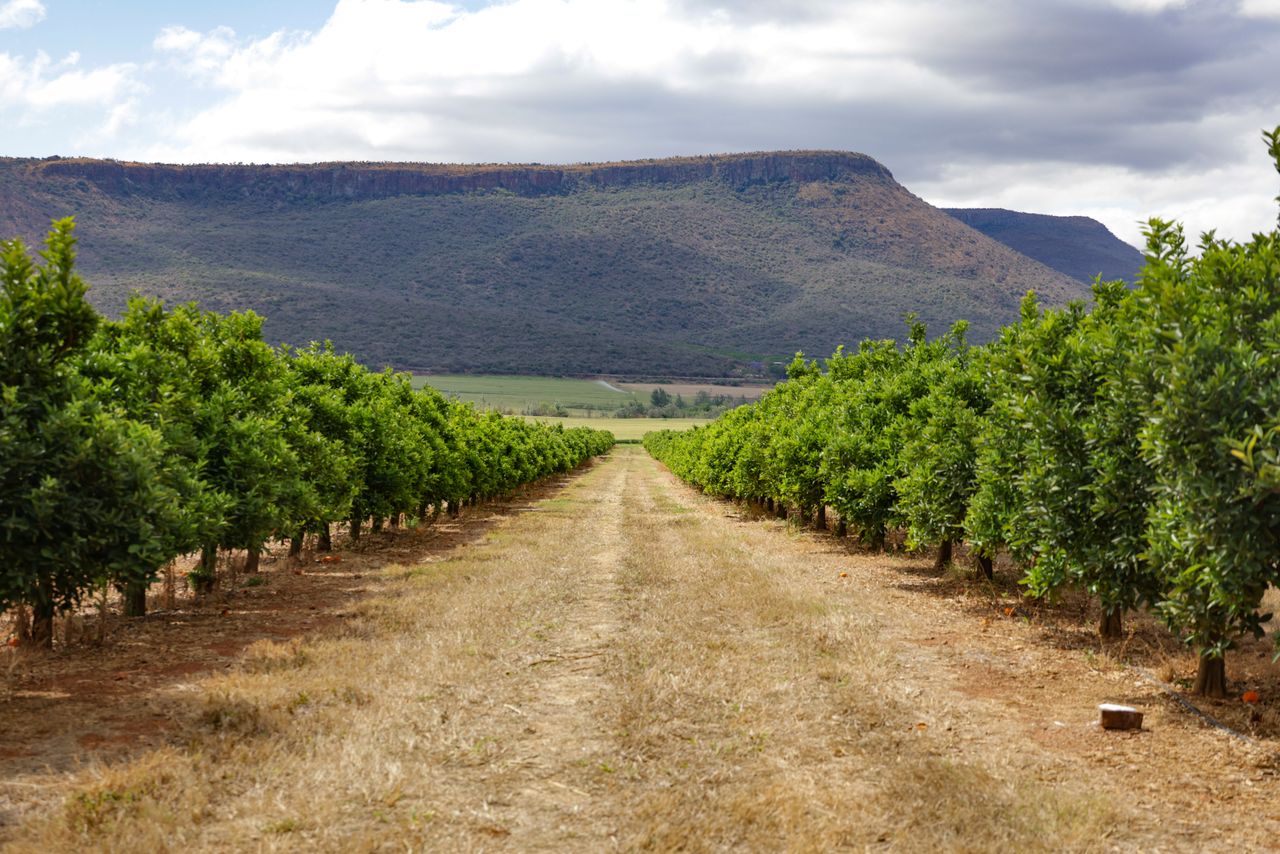
A ten-year-old tree will not fit in a truck bed. We bring the spade truck, set the tree, and backfill the hole. You get full size on day one with no lifting on your end.
Danskin Ridge is easy on this front. Many homes here have a detached shop and room for RV parking. Gate width and turning space are rarely a problem. The same holds for tree planting on Meridian acreage along Columbia and Ten Mile.
Two things to check before you book:
- Where your irrigation lines run, so the spade misses them.
- Whether the ground is soft, since a heavy truck can rut wet soil.
Call us about access and we will sort it out over the phone. Most of it takes two minutes to answer.
Getting to the Farm from Danskin Ridge
The drive takes about 21 minutes and covers 13.4 miles. Most of it runs west on straight farm roads. You leave Ada County partway through and finish in Canyon County.
Here is the route:
- Head out to S Danskin Ln and turn right.
- Turn left onto W Columbia Rd and stay on it about two miles.
- Continue onto E Locust Ln.
- At the traffic circle, take the second exit and stay on E Locust Ln.
- Turn left onto S Can Ada Rd, also signed S Happy Valley Rd.
- Turn right onto E Lewis Ln and follow it three miles.
- Turn left onto ID-45 S, then right onto Emerald Rd, which becomes Lake Shore Dr.
- From that last turn, stay on Lake Shore Dr for about four and a half miles. You will pass along the south side of the Lake Lowell area. Our farm is on the left at 12747 Lake Shore Dr.
Two notes before you head out. Maps flags the short stretch on S Danskin Ln as a restricted-use road. Check the route on your own map first. And pulling a trailer is easy once you arrive; the property has room to turn and load without tight corners.
Spring weekends run busier than the rest of the year. Call us before you leave and we will have your tree ready.
We serve Danskin Ridge, Meridian, and service areas across the Treasure Valley. Call us to see what is dug and ready.
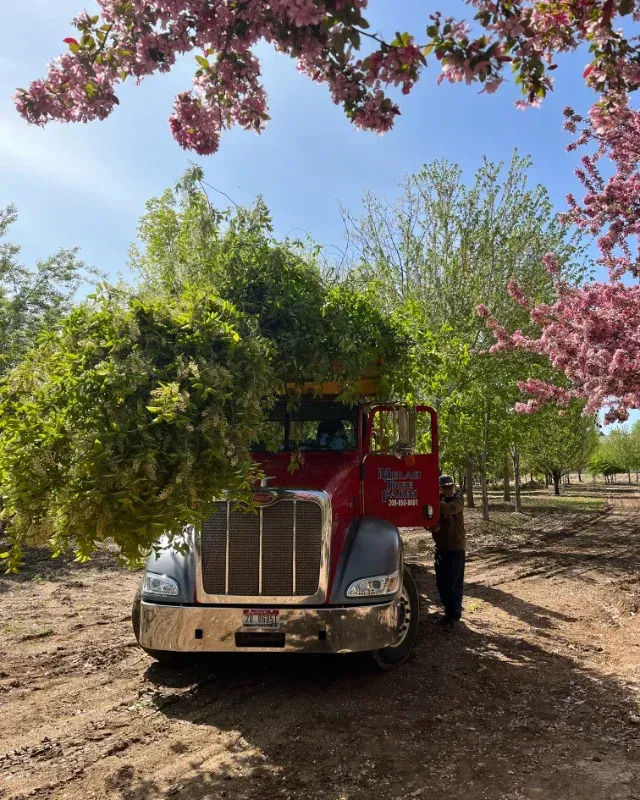
What Happens the Week Your Tree Goes In
Most of our first-time buyers ask the same thing: what does planting day actually look like? Here is how the week runs.
Your tree comes out of the field fresh. We dig it, wrap the root ball in burlap, and move it. It has not been sitting in a plastic pot on hot asphalt for two seasons. That fresh dig is why the tree settles in so well.
Timing does a lot of the work. Fall and early spring are the two windows we point people toward. Roots get weeks of mild weather to spread before real heat lands. A tree planted in July spends its first month just trying to keep up.
Before the spade truck rolls, our crew checks a few things on your lot:
- Gate width and the path to the planting spot.
- Overhead lines the boom has to clear.
- Soft ground that a heavy truck could rut.
Then the hole gets dug, the tree gets set, and the soil goes back around it. Water goes on the same day. That first soaking matters more than anything you do the following week.
We run the same sequence on jobs out toward Melba and Kuna. The lot changes. The steps do not.
Keeping a New Tree Alive Through the
Meridian Summer
Planting day is the easy part. Month two is where most trees get lost. By then the novelty has worn off and the heat has arrived.
Water deep, not often. A short daily sprinkle wets the top inch and stops there. Roots follow water down, so a long slow soak pulls them deeper into the soil. On clay ground, deep roots are what carry a tree through August.
Watch where the water goes after you shut it off. Old field drainage patterns still run under many lots out here. Water can pool in one low corner and never reach the tree at all. Walk the yard an hour after watering and see for yourself.
Stake only if wind demands it. Most trees settle faster when the trunk is allowed to flex. If you do stake, pull the stakes the following year. Straps left on too long cut into bark.
The first two winters ask the most of a young tree. Freeze and thaw cycles heave soil and can lift shallow roots. Check the base each spring and firm the soil back down if it has lifted.
The payoff builds every year the tree stays healthy. Mature trees across the Treasure Valley return real value through cleaner air, lower cooling bills, and stronger property values. Your own yard is where that starts.

Frequently Asked Questions
Trees are serious, and so are your questions. Here are just a few:
How long is the drive from Danskin Ridge to the farm?
The drive runs about 21 minutes and covers 13.4 miles. Most of it is straight farm road heading west. Traffic is light outside of spring weekends.
Can a spade truck get onto a Danskin Ridge lot?
Usually yes. Gate width and soft ground are the two things we check. Many homes here already have shop access and RV parking, which helps.
Are there tree species I cannot plant near the road edge?
Yes, some species are not permitted in public rights-of-way. Meridian's code points to the Treasure Valley Tree Selection Guide for that list. Check whether your lot is city or county first, since the rules differ.
When is the best planting window here?
Fall or early spring, ahead of peak summer heat. Roots get weeks of mild weather to spread before August arrives. Fall planting here runs from mid-September through October.
Do I need a permit to plant on my own acreage?
Rules depend on where the tree goes. Planting well inside your own lot is treated differently than planting near the road edge or a ditch. Call the city or county before you dig near a property line. Call us if you want help picking the spot.
Should I buy one big tree or a row of smaller ones?
It depends on what you want the tree to do. A row along the windward edge cuts wind for the whole yard. One large specimen gives you shade and a sight line where you want it most.
COMPANY
CUSTOMER CARE
LOCATIONS
NEWS
LEGAL


© Copyright 2026. Melad Tree Farm. All Rights Reserved.