What Is a Tree Nursery? A Simple Guide to Where Trees Begin
U.S. nurseries grow more than 1 billion tree seedlings every year. That's a lot of young trees waiting to find a home.
Every tree you see in a yard, park, or orchard started somewhere. For most, that place was a tree nursery. A nursery is where trees are grown from seeds or cuttings until they're ready for planting. Whether you want shade trees, fruit trees, or evergreens, a nursery is often the best place to start.
This guide explains what a tree nursery is and how it works. We'll cover the difference between a nursery and a tree farm. You'll also learn how trees grow at a nursery and what to look for when buying one. By the end, you'll know how to find the right trees for your property here in Nampa.
What Is a Tree Nursery?
A tree nursery is a place where trees are grown from seeds or cuttings until they're ready for sale or planting. Nurseries focus on the early stages of a tree's life. Workers plant seeds, care for seedlings, and prepare young trees for customers. Most nurseries sell to homeowners, landscapers, and land restoration projects.
Trees at a nursery are usually smaller and younger than those at a tree farm. This makes them easier to transport and plant. Many nurseries also grow fruit trees using grafting methods. If you need healthy, young trees for your yard or land, a tree nursery is a great place to start.
Nurseries grow many types of trees. These include:
Shade trees
Ornamental trees
Fruit trees
Evergreens
People buy from nurseries for many reasons. Homeowners want trees for their yards. Landscapers need stock for projects. Cities plant trees along streets and in parks. Land managers use nursery trees to restore forests and open spaces.
Most nursery trees are sold while still young and small. This makes them easier to move and plant. Some trees are grown in containers. Others grow in open fields and are dug up when ready for sale.
At Melad Tree Farm, we grow most of our trees for 5 to 10 years before they're ready for customers. This extra time in the ground helps trees develop strong roots and sturdy trunks. When you buy from us near Lake Shore Drive in Nampa, you're getting trees that have had time to grow right.
Tree Nursery vs. Tree Farm — What's the Difference?
These two terms sound alike, but they describe different things.
A tree nursery focuses on young trees. Seedlings are grown until they're ready for someone else to plant. The goal is to sell trees that will keep growing in a new location.
A tree farm grows trees to maturity. Some farms raise trees for timber or wood products. Others grow Christmas trees for seasonal harvest. The trees are often the end product, not a starting point.
Here's a simple breakdown:
Focus
Young trees for transplanting
Mature trees for harvest or sale
Tree age
Seedlings to small transplants
Fully grown or near-mature
Customer
Homeowners, landscapers, land projects
Wholesale buyers, timber industry, direct consumers
End goal
Tree continues growing elsewhere
Tree is harvested or sold as-is
Some businesses do both. At Melad Tree Farm, we operate as a working tree nursery and orchard near Nampa. We grow trees over many years so they're strong and ready for your property.
Not sure which option fits your needs? If you want a tree you can plant yourself and watch grow, a nursery is usually the right choice.
Browse our tree selection to see the full variety of shade, ornamental, and evergreen trees we offer.

How Trees Are Grown at a Nursery
Growing a tree takes time and care. Here's a look at the steps most nurseries follow.
1. Seed collection and storage
It starts with seeds. Workers gather seeds from healthy parent trees. Seeds are cleaned, tested, and stored until planting time.
2. Sowing and germination
Seeds are planted in trays, containers, or prepared beds. With the right mix of water, light, and temperature, seeds sprout into tiny seedlings.
3. Transplanting
Once seedlings are strong enough, they're moved to larger containers or field rows. This gives roots more room to spread.
4. Container vs. field growing
Some nurseries grow trees in pots. Others plant directly in the ground. Container trees are easy to move. Field-grown trees often develop stronger root systems.
5. Grafting for fruit trees
Fruit trees are often grafted. This means joining a cutting from one tree onto the rootstock of another. Grafting creates trees that produce better fruit and grow more reliably. The Arbor Day Foundation offers helpful resources on tree selection and care if you want to learn more about how different tree types are cultivated.
6. Lifting and grading
When trees reach the right size, they're carefully dug up or removed from containers. Workers grade each tree for health, size, and root quality.
7. Time in the ground
Growing a sale-ready tree doesn't happen overnight. Many trees need 1 to 4 years. At our Nampa location, most of our trees grow for 5 to 10 years before they leave the farm. This longer timeline helps produce stronger, more established trees.
What to Look for When Buying from a Tree Nursery
Buying a tree is an investment. A little know-how helps you pick one that will thrive for years.
Signs of a healthy tree
Look for these when you shop:
A straight, sturdy trunk with no cracks or wounds
Leaves or buds that look green and full (in season)
No signs of pests, disease, or damaged bark
A root ball that feels firm, not loose or dried out
Check the roots
One thing we always tell customers: check the roots before you buy. Gently lift the tree from its container if you can. Healthy roots are white or light tan. They should fill the pot without circling tightly around the edges. A good root system means a tree that's more likely to take hold after planting.
Ask questions
Don't be shy. Good nursery staff are happy to help. Ask about:
How old the tree is
What kind of soil and sun it needs
How big it will get at maturity
Any care tips for the first year after planting
Buy locally adapted trees
Trees grown in your area are used to local weather and soil. This gives them a better chance of survival. At Melad Tree Farm, our trees grow right here in Nampa. They're already adapted to Idaho's climate and conditions.
Ask about guarantees
Some nurseries offer warranties on their trees. Ask what's covered and for how long.

Find a Tree Nursery Near You
Buying from a local nursery has real benefits. Trees grown nearby are already used to your climate. They handle local weather, soil, and seasons better than trees shipped from far away. You also get to see what you're buying before it goes in the ground.
What to expect when you visit
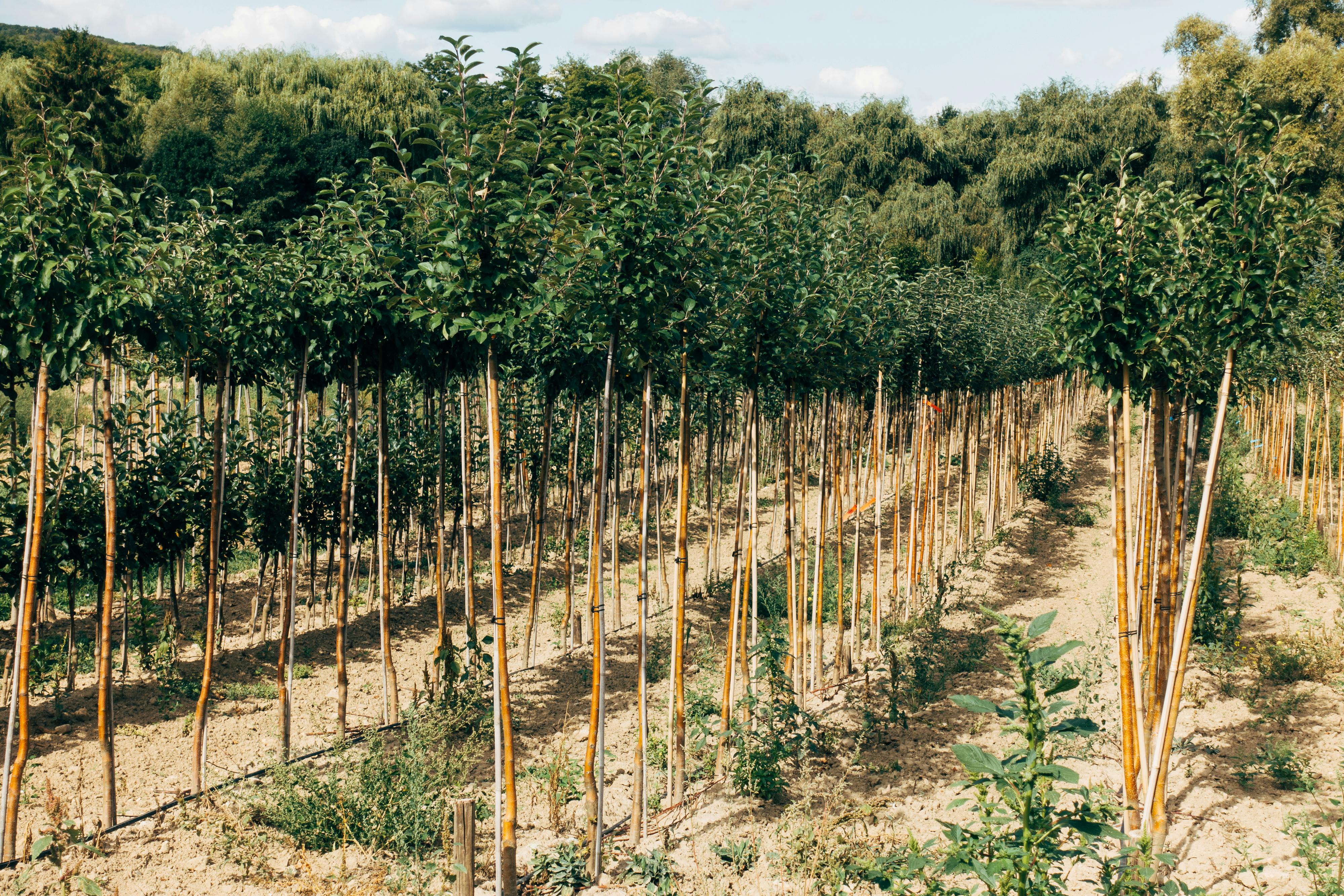
A good nursery feels like a working farm. You'll see rows of trees in different sizes and stages of growth. Staff can walk you through options and answer questions. Some nurseries let you tag a tree and come back when you're ready to plant.
How to find nurseries near you
A quick search on Google Maps for "tree nursery near me" will show options in your area. Look at reviews, check hours, and see what types of trees each location carries.
Visit Melad Tree Farm in Nampa
We're located at 12747 Lake Shore Dr in Nampa. Our orchard and nursery sit on open land where trees have room to grow strong over 5 to 10 years. Whether you need fruit trees, shade trees, or something specific for your property, we can help you find the right fit.
We also offer tree transplanting services and tree photography sessions on the farm. We've worked with homeowners, landscapers, and even municipalities like the City of Meridian and City of Caldwell. You can view our project portfolio to see examples of our work.
Have questions? Contact us — we're happy to help.
