Find the Right Trees for Your Castle Peak Yard in Nampa
Castle Peak is a master-planned subdivision in northern Nampa, Idaho. The neighborhood has spacious lots, walking trails, and a community pool. If you live here, you already know the yards have room for trees — but picking the right ones takes some thought.
Most Castle Peak homes sit on 0.1 to 0.5-acre lots. The HOA has landscaping rules. Canyon County soil runs alkaline. And Nampa falls in USDA Hardiness Zone 7a, with only about 11 inches of rain per year. All of that shapes which trees will actually grow well on your property.
As a tree nursery Castle Peak homeowners can reach in minutes, Melad Tree Farm grows trees that match these local conditions. Our stock includes species aged five to ten years, rooted and ready for the soil and climate you're working with.
Spring is the best planting window in the Treasure Valley, and it's short. Call or check availability before April — our spring stock moves fast once temperatures warm up.
Trees That Handle Castle Peak's Alkaline Soil and Dry Summers
Nampa averages only 11 inches of rain per year. Any tree you plant on a Castle Peak lot needs to handle dry summers without constant hand-watering. Drought-tolerant species save you time, water, and money over the life of the tree.
Soil is the other factor. Canyon County soil often tests above pH 7.0 and can reach well into the 8.0 range. That high alkaline level causes problems for popular picks like maples and dogwoods. Their leaves yellow, growth slows, and many fail within a few years.
We grow species that do well in these exact conditions:
Honeylocust — handles alkaline soil and provides filtered shade on hot lots
Hackberry — deep roots, low water needs, and strong once established
Ornamental crabapple — adds spring color without outgrowing a Castle Peak yard
You can browse our full tree library to see sizes, shapes, and growth details for each species.
If you live in Indian Creek or Blackhawk, you face the same soil profile.
These species work just as well on your lots.
What to Expect When You Pick Up Trees for a Castle Peak Yard
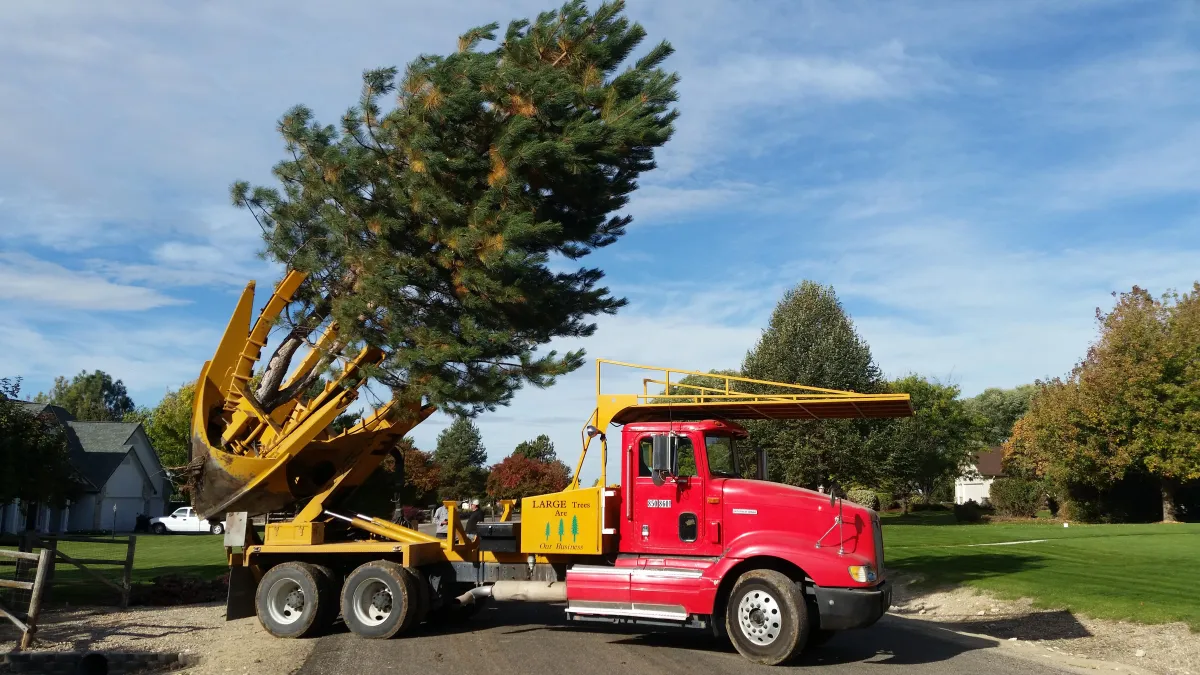
If this is your first time buying a tree from a farm, the process is simple. You drive in, walk the rows, and pick what fits your yard. Our orchard is laid out so you can see the full size and shape of each tree before you commit.
Our parking area handles trucks and trailers. Most Castle Peak buyers load 15-gallon specimens, and we have the space for you to pull up close. If you drive an SUV, we can help you figure out what fits safely in your vehicle.
Before you leave, our staff walks you through the basics. We cover root ball care, how much water your tree needs in the first season, and how fast you can expect it to grow on your lot. Learn more about how a visit works on our Nampa tree nursery page. You leave with a tree and a clear plan.
Spring weekends get busy. If you want a shorter wait and more time to ask questions, visit on a weekday. You'll have more room to browse and more one-on-one help from our team.
Shoppers from the Lakeview Park area and along the Midland Boulevard route also stop in regularly. The drive is quick from most of north Nampa.
HOA-Friendly Tree Choices for Castle Peak Subdivision Lots
Castle Peak's HOA is managed by Park Pointe Management Services. Before you plant any tree, you need architectural approval for the landscape change. Skipping this step can lead to fines under Idaho HOA law, so check your CC&Rs first.
The approval process is worth your time. It keeps the neighborhood looking consistent and protects your investment. We can help you choose species that are likely to pass review based on what we've seen Castle Peak homeowners plant before.
Height matters on subdivision lots. If your planting spot sits near overhead power lines, choose a tree with a mature height under 20 feet. Ornamental crabapples and smaller honeylocust varieties fit this range well.
Street-side plantings in Nampa follow the Treasure Valley Tree Selection Guide. If you want to plant anything in a public right-of-way, the Nampa City Forester must approve the species first. This applies to the strip between your sidewalk and the curb.
We stock trees that meet both HOA and city guidelines.
Tell us about your lot size, your planting spot, and any restrictions in your approval letter. We'll point you toward the right options.
How to Reach Us from Castle Peak and
North Nampa
From Castle Peak, head toward Lone Pine Ave and turn left. Turn right onto Sumpter St, then left onto Santa Ana Ave. Follow Santa Ana Ave south until it meets Ustick Rd.
Stay on Ustick Rd through three traffic circles. At the third circle, take the exit onto E Ustick Rd and continue to S Florida Ave. Follow S Florida Ave south to the traffic circle and take the third exit. Continue on S Florida Ave for about 2 miles.
Turn right onto ID-55 S/Karcher Rd and follow it for 3 miles.
Turn left onto Riverside Rd/Sunny Slope Rd. After about 2.5 miles, turn left onto Lake Shore Dr/Perch Rd. Then turn left again onto Lake Shore Dr/Marsing Rd. Melad Tree Farm will be on the right at 12747 Lake Shore Dr.
The full drive is about 18 miles and takes roughly 31 minutes. Traffic near Ustick Rd and Karcher Rd can slow things down during afternoon hours.
Drivers from the Desert Springs Elementary zone and Sage Valley Middle School area follow the same route once they connect to Santa Ana Ave or Ustick Rd. We also serve Caldwell, Meridian, Kuna, and Star — see all locations we serve.
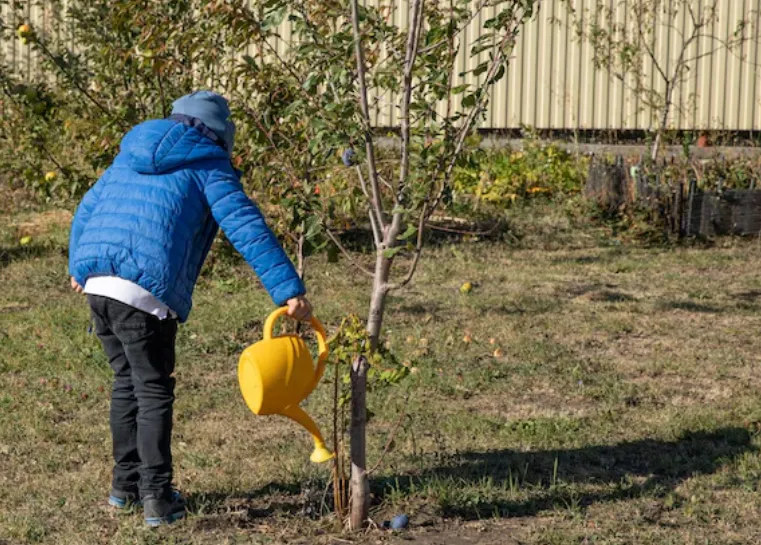
Planting and Watering Trees on Castle Peak's Builder-Fill Soil
Most Castle Peak homes were built between 2000 and 2020. During construction, builders compact fill dirt in the top 18 inches of the yard. That compacted layer makes it hard for roots to spread and water to drain.
Before you set a root ball, break up the clay hardpan around your planting hole. Mix in compost to give roots loose soil to grow into. This one step makes a big difference in how fast your tree establishes.
Watering in Nampa's dry climate takes a targeted approach. Drip irrigation or micro-emitters deliver water right to the root zone without waste. A slow, deep soak two to three times per week works better than a daily sprinkle from a sprinkler head.
Before you dig anywhere on your property, call Digline at 1-800-342-1585. This is required for all Nampa residents. Digline marks buried utilities so you don't hit a gas or water line while planting.
Homes near Franklin Road and Garrity Boulevard deal with the same compacted-fill problems. If you live in those areas, the same soil prep steps apply to your yard.
Keeping New Trees Healthy Through a
Nampa Winter
Fall planting works well in Nampa if you time it right. Get your tree in the ground at least six weeks before the ground freezes in late November. That gives roots time to settle before the cold sets in.
Mulch helps hold moisture and regulate soil temperature through winter. Spread a 3- to 4-inch layer around the base of the tree. Keep the mulch a few inches away from the trunk — piling it against the bark traps moisture and causes rot.
Nampa's winter lows can drop below 20°F. Young bark is thin and cracks easily in hard freezes. Wrap the trunk with a tree wrap for the first two winters to protect against cold damage and sunscald.
Nampa gets over 210 sunny days per year, which helps new trees recover in spring. But at roughly 2,470 feet of elevation, wind dries out roots faster than you might expect. Check soil moisture through winter, even when the tree looks dormant. A deep soak once or twice a month during dry stretches keeps roots from drying out underground.
Frequently Asked Questions
Trees are serious, and so are your questions. Here are just a few:
Do I need HOA approval to plant a tree in Castle Peak?
Yes, Castle Peak's HOA requires architectural review before you make any landscape changes. Park Pointe Management Services oversees the process. Submit your request before you buy a tree so you know what's allowed on your lot.
When is the best time to buy trees for a Nampa yard?
Mid-March through May is the best window. Our spring stock arrives in March, and the most popular species sell out before the April rush. Call ahead to check what's available.
Can I plant a large shade tree under power lines in Castle Peak?
Stay with species that have a mature height under 20 feet. Taller trees grow into power lines over time and create safety and maintenance problems. Ornamental crabapples and smaller honeylocust varieties fit well under lines.
Does Nampa require a permit for street trees?
The Nampa City Forester must approve any tree planted in a public right-of-way. This includes the strip between your sidewalk and the curb. Contact the city before planting in that space.
Is fall planting safe in Nampa before the first freeze?
Yes, fall planting works if you get the tree in the ground at least six weeks before the ground freezes in late November. This gives roots enough time to settle before winter.
What trees survive Nampa's alkaline soil without amendments?
Honeylocust and hackberry handle high-pH soil well without extra work. Maples can grow here but may need sulfur amendments to lower the pH around the root zone.
COMPANY
CUSTOMER CARE
LOCATIONS
NEWS
LEGAL


© Copyright 2026. Melad Tree Farm. All Rights Reserved.