Tree Nursery near Knowlton Heights:
A Short Drive from Canyon County Homes
Knowlton Heights sits in southwest Canyon County, Idaho, where many homes rest on large lots between Caldwell and Marsing. This page covers a tree nursery Knowlton Heights families can reach in a short drive north to Nampa.
A shorter haul matters more than most buyers think. It keeps root balls fresh, makes loading into a pickup or trailer simple, and matches your yard's soil and wind conditions to ours.
You get stock already used to Canyon County growing life.
Our Nampa tree farm focuses on shade trees, ornamentals, and evergreens suited to local yards. Most of our stock is five to ten years old, grown here in the Treasure Valley on open orchard ground.
Call ahead to check current stock before you make the drive.
We will tell you what is ready to load the day you come.
Canyon County Yards Need Trees Built for Zone 7a and Alkaline Soil
If you plant on a Knowlton Heights lot, farm parcel, or acreage home, your trees face a specific set of local conditions. Picking stock built for those conditions is the single biggest factor in long-term survival.
Canyon County sits in USDA Zone 7a/7b under the 2023 hardiness map. Winter lows here run from 0°F to 10°F on cold nights. Trees rated for warmer zones often die back or stall out after a hard freeze.
Soil is the next hurdle. Treasure Valley ground often tests above pH 7.5, and some spots hit 8.0 to 8.5. Trees not bred for alkaline soil yellow between the leaf veins, a sign of iron chlorosis. Species matched to this pH stay green and grow on pace.
Rainfall is light at roughly 11 inches a year. Drought-tolerant stock holds up better than species from wetter eastern states. You water less, and the tree still thrives.
One more local factor shapes tree health here: afternoon winds off the Snake River Plain.
Those winds pull moisture from young trees on open Knowlton Heights lots. Picking wind-tolerant species and siting them with care makes a real difference in the first two seasons.
Shade, Ornamental, and Evergreen Picks That Hold Up in Southwest Canyon County
Most Knowlton Heights buyers come in sorting through two or three goals: shade over the house, privacy along a fence line, or an ornamental tree for seasonal color. We stock trees that cover all three and hold up in local soil.
For shade on clay-heavy, alkaline ground, a few picks stand out:
- Autumn Blaze Maple for fast growth and fall color
- Sunburst Locust for light shade that still lets grass grow below
- Patmore Ash or Summit Ash for large lots with room to spread
- Littleleaf Linden for a classic rounded canopy
Ornamental picks bring seasonal color without taking a lot of space:
- Canadian Red Chokecherry for spring flowers and summer red foliage
- Spring Snow Crabapple for white blooms with no messy fruit drop
- Accolade Cherry for pink flowers in early spring
For windbreaks along the west or south side of your property, evergreens do the heavy lifting. Colorado Blue Spruce, Serbian Spruce, and Bristlecone Pine all hold up to Snake River Plain wind, alkaline soil, and winter cold.
The same growing profile carries into nearby communities like Marsing, Wilder, and Greenleaf. If a tree does well on a Knowlton Heights lot, it will do well on those parcels too.
What to Measure at Home Before You
Drive to the Nursery
A short prep list at home saves you a second trip. Whether you are a first-time buyer or replacing a tree you lost last winter, five quick notes give our staff enough to match you with the right stock.
Start with sun hours. Walk the planting spot in the morning, midday, and late afternoon. Count full-sun hours. Most shade trees want six or more; smaller ornamentals can often work with four to six.
Measure the distance from the planting spot to the nearest utility line and to your house. Class III trees — the large shade and evergreen types — belong 35 to 50 feet from the house. Never plant tall stock directly under overhead power.
Write down how your soil feels in the hand. Sandy soil falls apart when wet. Silty loam holds its shape but crumbles. Heavy clay rolls into a ribbon and stays tight. Each type changes which species we pick for you.
Bring a photo of the yard on your phone. A quick shot of the planting spot, the fence line, and any nearby trees tells us more than a paragraph of description.
One last note for Knowlton Heights buyers: many properties in the area have irrigation ditches running along the lot lines. Flag where they sit so we can plan root placement around them. Trees planted too close to a ditch bank often lose roots when the bank shifts.
Getting to Our Nampa Tree Farm from Knowlton Heights
Our farm sits at 12747 Lake Shore Drive in Nampa, along the south shore of Lake Lowell. Knowlton Heights is one of the many communities that we serve, and from here the drive runs about 6.6 miles and takes roughly 9 minutes in normal traffic.
Check out our locations page to learn more.
The route is straightforward:
- From Knowlton Heights, head toward Chicken Dinner Road
- Continue east and follow Marsing Road
- Stay on Marsing Road as it curves along the south side of Lake Lowell
- Our farm is on the right, just past Lake Side Barn
You will pass Peaceful Valley Cemetery on the way in, then Namaste in the Country and Legacy Roofing as you get close. Lake Side Barn is the final landmark right before our entrance.
Morning drives run cooler in summer, which matters if you are hauling a balled-and-burlapped tree back on a hot afternoon. The Marsing Road route stays flat and open, so pickups and trailers handle it with ease.
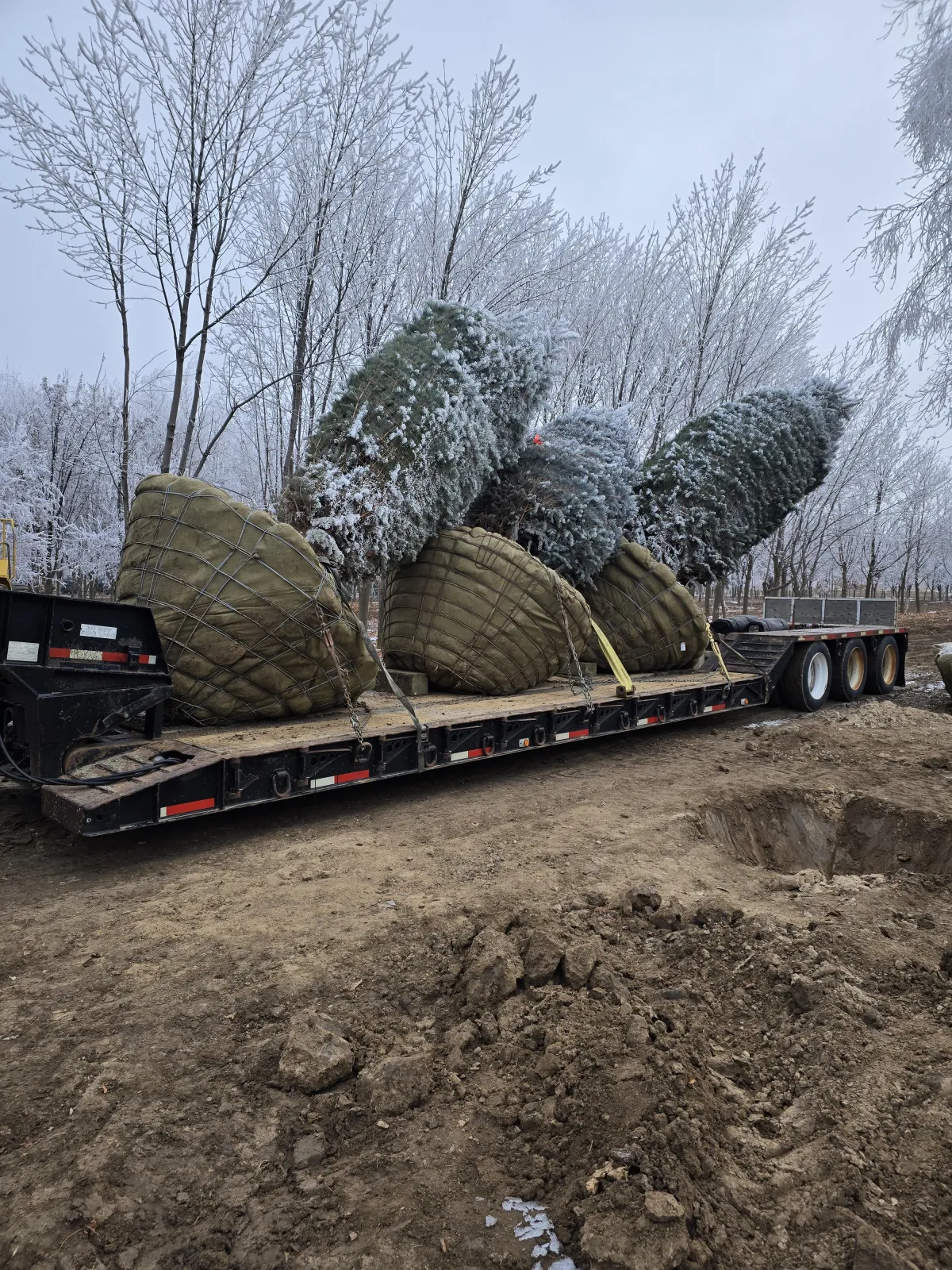
How We Load Balled, Potted, and Bare-Root Trees for the Trip Back
Most Knowlton Heights buyers arrive in a pickup, SUV, or with a small trailer. We load each tree type the right way for the ride home so you show up with healthy stock.
Potted trees ride best upright in a truck bed, strapped at the pot and again at the trunk. The pot holds the root ball in place, and the straps keep the canopy from whipping in the wind.
Balled-and-burlapped trees need more care. The root ball is heavy, and the burlap can tear if lifted by the trunk. Our staff use a dolly and lift from under the ball. A tarp goes over the canopy to block wind on the drive back.
Bare-root stock is the easiest to haul. We pack the roots in wet wood shavings and wrap them in plastic. This stock ships in early spring only, and it fits in most vehicles — even a sedan with the back seat folded down.
A few rules keep any tree healthy on the ride home:
- Keep the trip under an hour when possible
- Cover the canopy to block wind stress on leaves
- Drive with the tree in the shadiest spot of the vehicle
- Water the root ball as soon as you get home
The haul from our Nampa farm back to Knowlton Heights runs about 9 minutes on Marsing Road. A simple tarp handles wind damage for a trip that short.
Care Steps That Keep New Trees Alive Through Treasure Valley Summers
The first two seasons decide whether a new tree lives or dies. Most transplant loss in Canyon County comes from one of four missed steps, and each one is simple to handle if you plan ahead.
Water deeply, not often. A slow soak that reaches 12 to 18 inches down trains roots to grow deep. Drip irrigation beats overhead spray — it puts water where the roots are and wastes less to evaporation. Shallow watering grows shallow roots, and shallow roots cook in July.
Mulch matters almost as much as water. Spread two to three inches of bark or wood chip around the tree, out to the edge of the canopy. Pull the mulch back a few inches from the trunk so the bark stays dry. A mulch volcano piled against the trunk rots the base.
Watch for iron chlorosis on trees sensitive to alkaline soil. If you see yellowing between green leaf veins, apply chelated iron or soil sulfur three times a year — spring, summer, and fall. This keeps the tree fed while it adjusts to local pH.
Stake only if wind threatens to tip the tree. A little trunk sway builds a stronger base. When you do stake, use wide soft ties and remove them within one growing season. Ties left too long girdle the trunk.
The first July after planting is the highest-risk window for Knowlton Heights yards. Heat, wind, and dry air all hit at once. Water on a steady schedule through that month, and check the soil two inches down before each watering.
Plan your visit from Knowlton Heights when you are ready. We will walk the stock with you and match trees to your yard.
Frequently Asked Questions
Trees are serious, and so are your questions. Here are just a few:
How long is the drive from Knowlton Heights to your Nampa tree nursery?
The drive runs about 9 minutes and 6.6 miles via Marsing Road in normal traffic. Allow extra time on summer weekends or if you are pulling a trailer.
Do I need a truck to haul a tree home?
Most potted trees fit in an SUV with the seats folded down. Larger balled-and-burlapped trees need a pickup bed or a small trailer.
Bare-root stock in early spring fits in nearly any vehicle.
What planting zone is Knowlton Heights in?
Knowlton Heights sits in USDA Zone 7a under the 2023 hardiness map. Winter lows here run from 0°F to 10°F on cold nights.
When is the best time to plant trees in Canyon County?
Early spring and fall are the best planting windows. Both seasons give roots time to settle before summer heat or hard winter freeze.
Does Canyon County require permits to plant trees on private property?
Permits apply mainly to plantings in the public right-of-way, not on private lots. Call your local planning office to confirm the rules for
your specific parcel before you plant near the street.
Do you deliver to Knowlton Heights addresses?
Delivery availability and fees vary by tree size and season. Call us before your visit so we can confirm the current delivery radius and pricing to your address.
COMPANY
CUSTOMER CARE
LOCATIONS
NEWS
LEGAL


© Copyright 2026. Melad Tree Farm. All Rights Reserved.