Your Neighborhood Tree Nursery near Chateau Park in Nampa, Idaho
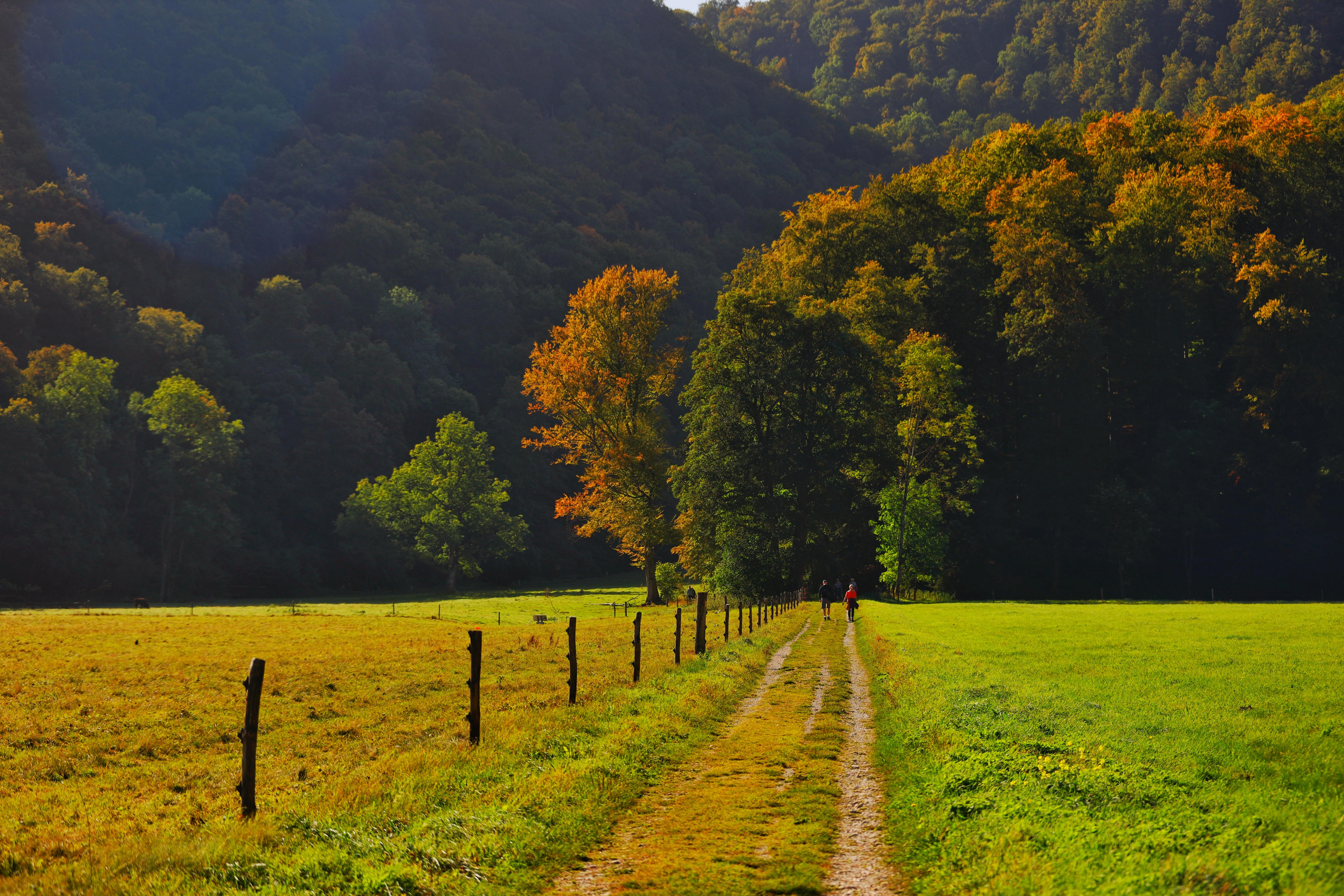
Chateau Park sits just east of Ten Mile Road, right where Nampa meets Meridian. Walk through the park and you can see what healthy, well-planted trees look like in Zone 7a soil. Those mature canopies and green lawns didn't happen by accident — they started with the right species in the right ground.
If you're a Nampa homeowner near Chateau Park looking for a tree nursery Chateau Park area families count on, this page is for you. We cover shade trees, fruit trees, evergreens, and ornamentals that do well in our alkaline clay soil.
Buying from a local grower matters here. Our stock is already hardened to Treasure Valley wind and summer heat above 95°F. Nampa only gets about 11 inches of rain per year, so picking the right tree saves you water and money from day one.
Spring is our busiest season. April and May weekends fill fast, so check what's in stock before the rush hits.
Trees That Handle Nampa's Alkaline Soil and Dry Summers
If you live in one of the newer subdivisions off Ten Mile Road or Franklin Road, you probably have a small-to-medium lot with young soil. Treasure Valley ground often tests above pH 7.5. Hardpan caliche can sit as close as 18 inches below the surface.
That matters when you pick a tree. Some species fight that alkaline clay their whole life.
Others settle right in.
Honeylocust, hackberry, and Canada Red Chokecherry all handle Nampa's soil well. They grow steady, tolerate dry summers, and don't need heavy amending to get started.
Maples are popular, but they often need sulfur amendments to thrive in our high-pH ground.
Talk to our staff before you buy one — we'll tell you straight whether your lot can support it.
Trees matched to local soil give you real benefits:
Less watering through July and August
Fewer chemical treatments over the life of the tree
Stronger root systems that hold up in Treasure Valley wind
When to Plant Trees in the Chateau Park Area
If you're a first-time homeowner near the Nampa-Meridian border, timing your tree planting makes a big difference. Our growing season runs about five months, and the windows on each end are your best bet.
Nampa's last average frost falls around May 10. The first frost comes back around October 10. That gives you two strong planting windows:
Early spring (March–April): Soil is soft, temperatures are mild, and roots have all summer to settle in.
Fall (September–October): Plant at least six weeks before the ground freezes so roots can grab hold before winter.
Most nurseries in the area get fresh spring stock by mid-March. That's when you'll find the widest selection of shade trees, fruit trees, and evergreens.
One thing to plan around — weekend events at the Ford Idaho Center can back up traffic along Garrity Boulevard. If you're driving from the Chateau Park area or North Nampa, weekday mornings are a smoother trip and a shorter wait once you arrive.
What to Check Before You Dig in a Nampa Subdivision
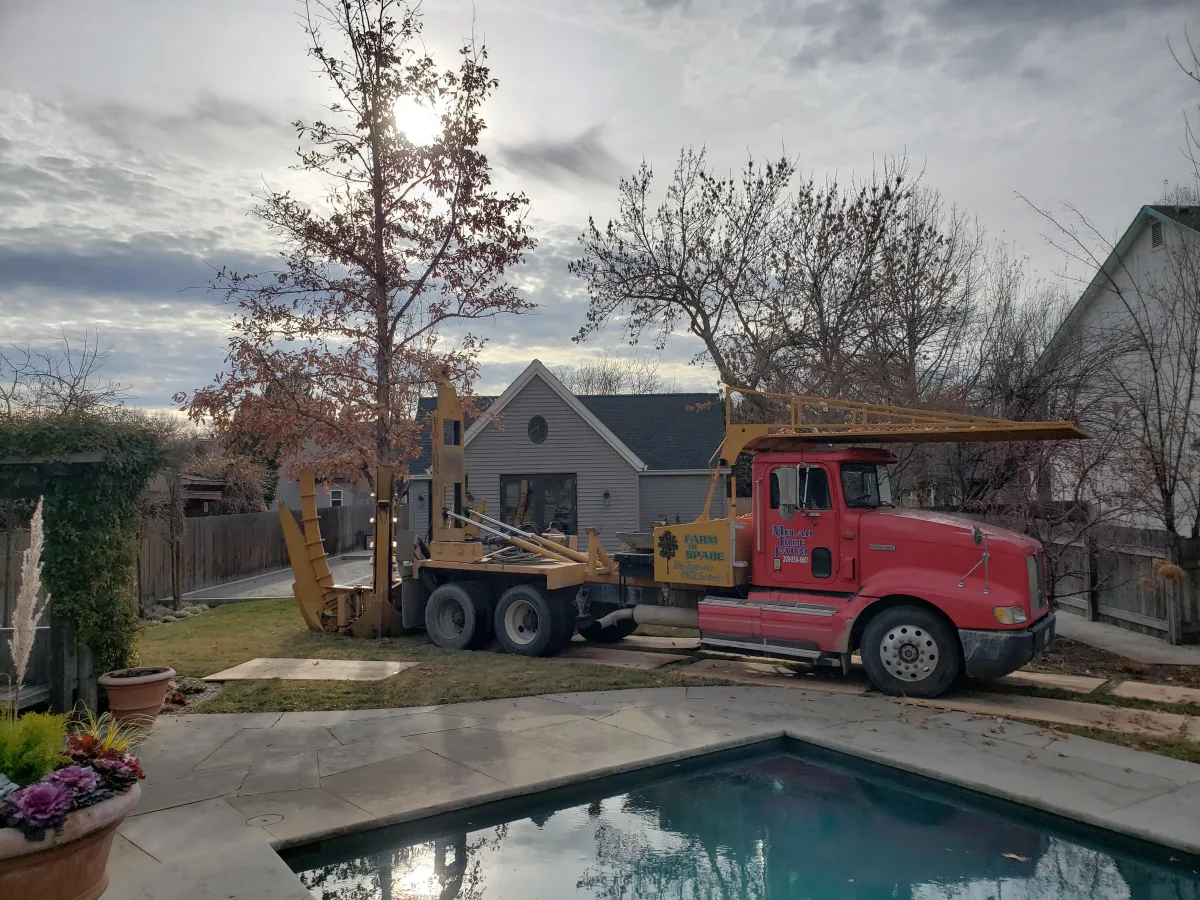
If you live in an HOA community near Chateau Park, Franklin Village, or Castle Peak, a few steps before you dig will save you headaches later.
Know the local rules. The Nampa Tree Ordinance covers right-of-way trees — the ones between the sidewalk and the street. The city and the homeowner share maintenance duty on those. If you want to plant in that strip, contact the Forestry Division first.
Call before you dig. Idaho Digline (811) is free and required by state law for all Nampa residents. They'll mark buried utility lines so you don't hit a gas or water pipe.
Look up. If power lines run over your planting spot, choose a species with a mature height under 25 feet. That keeps you clear of lines and out of trouble with Idaho Power.
Check your dirt. Many newer subdivisions have compacted builder's fill instead of natural soil. That packed ground needs amending before roots can spread. Dig a test hole and see what you're working with.
Read your covenants. HOA rules in planned communities near College of Western Idaho may limit which species you can plant or where you can place them. Check before you buy.
Driving to Our Nursery from Chateau Park and Nearby Nampa Neighborhoods
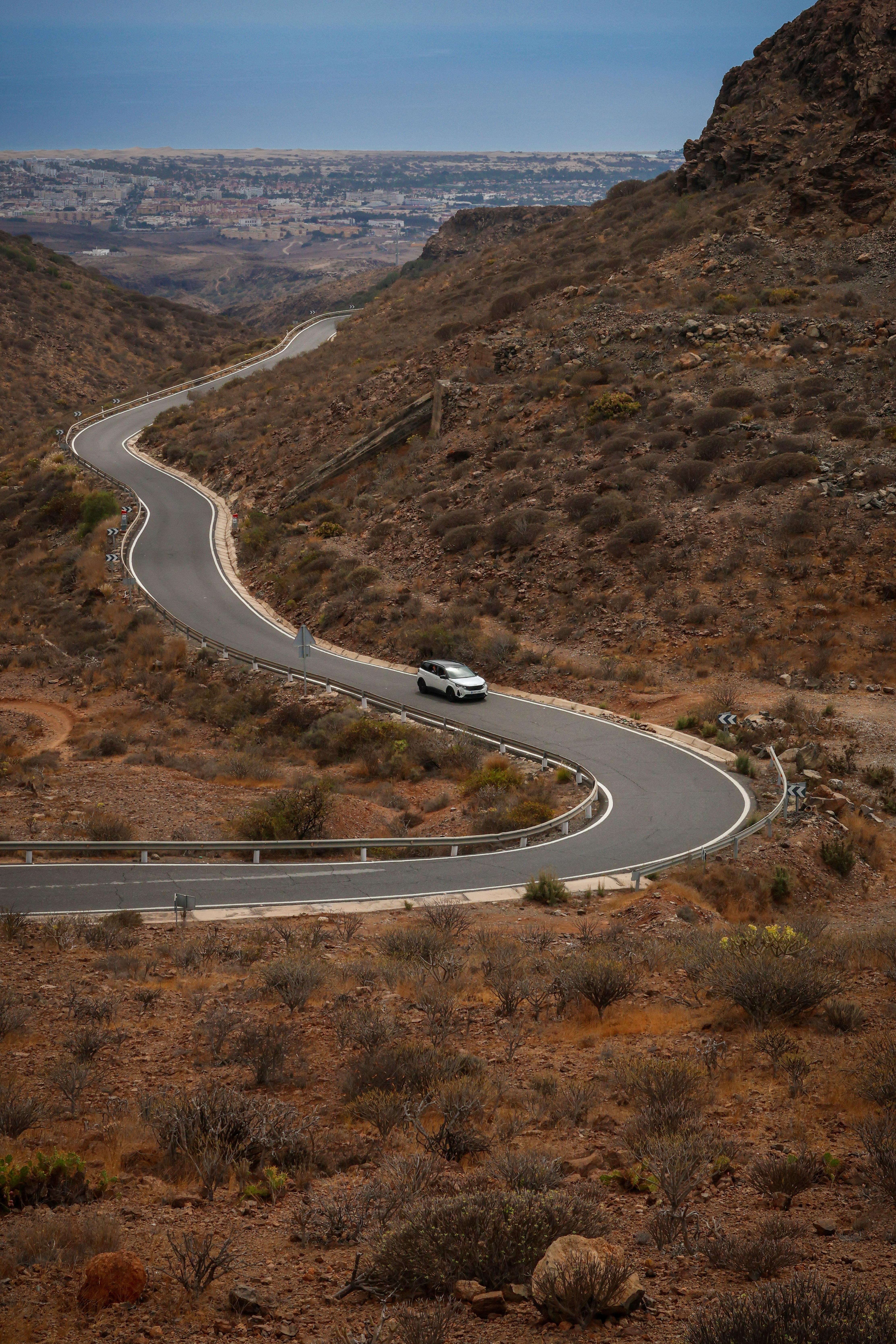
From Chateau Park, the drive to Melad Tree Farm takes about 30 minutes. Head west on W Chateau Dr and turn left onto N Ten Mile Rd. After about a mile, turn right onto W Franklin Rd, then left onto S Black Cat Rd. Follow that south for 3 miles and turn right onto W Amity Rd. At the traffic circle, take the third exit onto S Robinson Rd. At the next traffic circle, take the first exit onto E Locust Ln. Turn left onto S Can Ada Rd/Happy Valley Rd and continue south. Turn right onto E Lewis Ln, then left onto ID-45 S. Turn right onto Lake Shore Dr — you'll pass Red Roof Farmhouse on the way — and our farm will be on the left.
Our parking lot fits trucks and trailers, so loading 15-gallon specimens is easy. Drive right up to the rows and we'll help you get trees into your vehicle.
April and May weekends are our busiest times. Weekday mornings give you more room to walk the orchard and talk with our staff without a wait.
Coming from other Nampa neighborhoods:
Franklin Village: Take Nampa-Caldwell Blvd west and connect to the route above.
Garrity Blvd corridor: Head south on 12th Ave toward Amity Rd.
If you're shopping from the Meridian border near Chateau Park, the drive to our Nampa location is shorter than heading into central Boise. You'll spend less time on the road and more time picking trees.
We serve clients across multiple locations—visit our locations page to learn more.
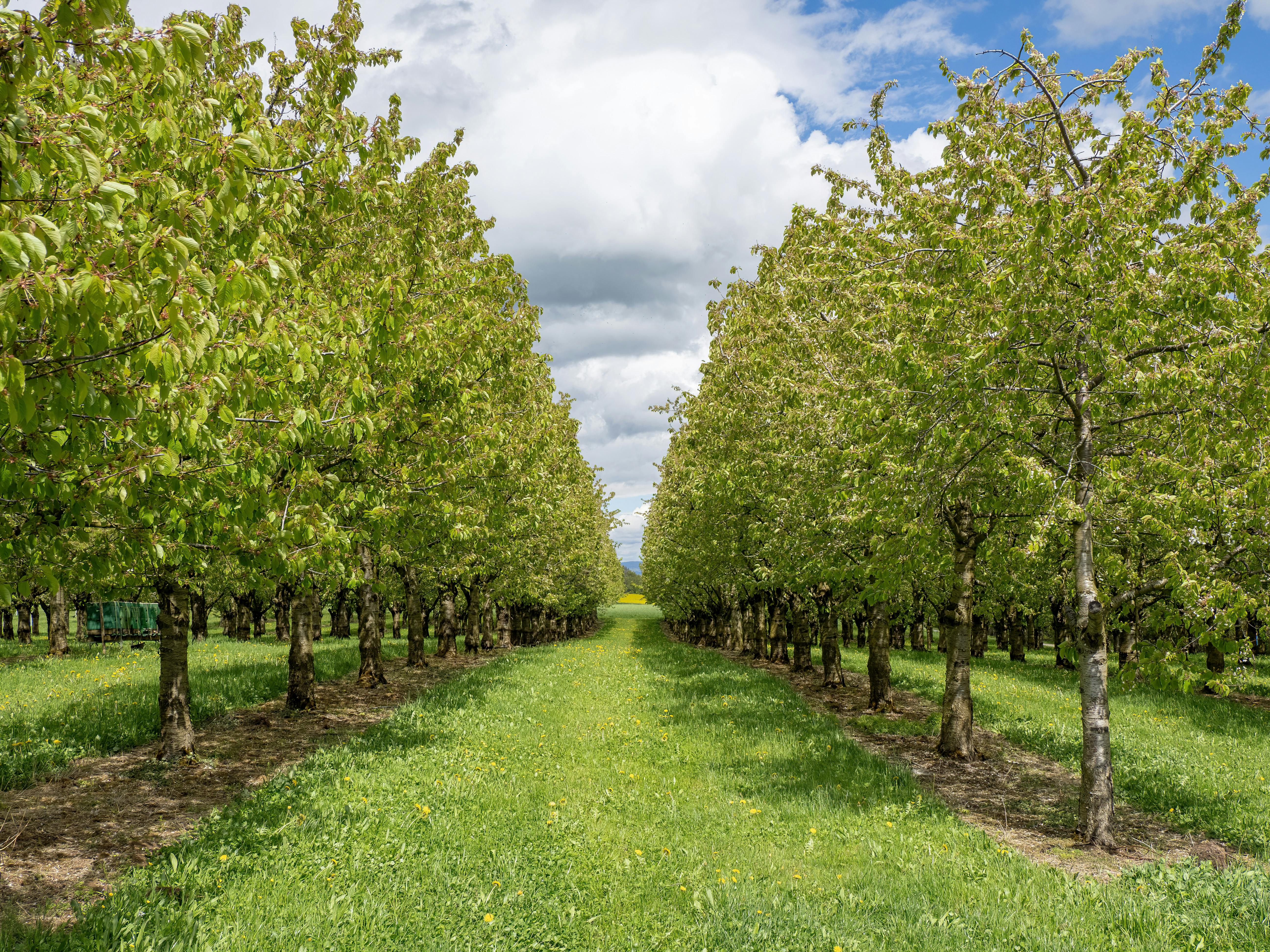
How to Pick Healthy Nursery Stock You Can Inspect in Person
Buying a tree in person beats ordering online for one simple reason — you can see exactly what you're taking home. Walking our rows lets you compare trees side by side before you spend a dollar.
Here's what to look for:
Trunk caliper: A thick, straight trunk means the tree has strong structure. Avoid trunks with deep cracks or peeling bark.
Branching shape: Look for evenly spaced branches growing outward, not crossing or rubbing against each other.
Root-ball firmness: Pick up the container or rock the root ball gently. It should feel solid, not loose or soggy.
Bring a few things with you when you visit. Photos of your yard showing sun and shade patterns help our staff point you to the right species. Notes on your soil type — sandy, clay, or amended — narrow down the list even faster.
Check the tag on every tree you consider. Mature height matters, especially if your lot has a 25-foot setback rule. A tree that fits your yard at three years old may crowd the house at fifteen.
Our stock grows right here in the Treasure Valley. That means every tree in our orchard is already used to 210 sunny days a year and dry summer wind. You're not gambling on a tree shipped from a different climate.
If you live near Lakeview Park in south Nampa, ask us about root-rot-resistant species. Water tables run higher in that area, and some trees don't handle wet feet well.
Keeping New Trees Alive Through the First Treasure Valley Winter
You planted your tree in spring or fall — now the goal is getting it through its first winter. December lows near 0°F can stress young roots that haven't fully settled in yet.
Don't stop watering when irrigation shuts off. Most Nampa neighborhoods turn off canal water in the fall. Your new tree still needs moisture. Keep hand-watering until the ground freezes solid.
Start again early in spring. Resume watering before your sprinkler system comes back on. That gap between snowmelt and irrigation startup is when young trees dry out fastest.
Mulch the right way. Spread 2–3 inches of wood mulch around the base of the tree. Keep it a few inches away from the trunk itself. Mulch piled against bark holds moisture where it causes rot.
Your neighborhood matters when it comes to drainage. West Nampa and areas south of I-84 tend to have heavier caliche closer to the surface. Water pools instead of draining, so watch for standing puddles after you irrigate.
North Nampa homeowners between Star and Meridian should watch for Chinook winds. These warm, dry gusts can pull moisture out of a young root ball fast, even in winter. A deep soak before a wind event helps the tree hold on.
Frequently Asked Questions
Trees are serious, and so are your questions. Here are just a few:
When do Nampa tree nurseries get spring shipments?
Most stock arrives by mid-March. That gives you a few weeks to browse before the April planting rush starts. Early shoppers get the widest selection of shade trees, fruit trees, and evergreens.
Do I need a permit to plant a street tree in Nampa?
Yes, if you're planting in the right-of-way strip between the sidewalk and the street. The Nampa Tree Ordinance governs those trees. Contact the city's Forestry Division for approval before you plant.
Can I plant trees in fall before Nampa's first hard freeze?
Yes, as long as you plant at least six weeks before the ground freezes in late November. That gives roots enough time to settle in before winter. September through mid-October is the sweet spot.
What trees survive Nampa's alkaline soil without heavy amendments?
Honeylocust, hackberry, and juniper all handle high-pH soil well. Maples can grow here but often need sulfur amendments to stay healthy. Ask our staff what fits your specific lot before you buy.
Is Saturday a good day to visit during spring planting season?
Weekends in April and May are our busiest days. Weekday mornings are less crowded and give you more one-on-one time with our staff. Keep in mind that Ford Idaho Center events can add traffic on Garrity Blvd if you're driving from North Nampa.
Do nurseries near Chateau Park deliver to Nampa subdivisions?
Delivery policies vary by nursery. Many require a minimum order of five or more trees. Call ahead to ask about delivery options and fees for your neighborhood.
COMPANY
CUSTOMER CARE
LOCATIONS
NEWS
LEGAL


© Copyright 2026. Melad Tree Farm. All Rights Reserved.