Your Neighborhood Tree Nursery Near Karcher Junction, Nampa
Karcher Junction sits at one of Nampa's busiest crossroads — near I-84 Exit 33 and Karcher Road (SH-55). If you live in this part of Nampa, finding the right tree for your yard starts close to home. This page covers species that fit local soil, how to time your planting, and how to reach Melad Tree Farm from Karcher Junction.
Nampa sits in USDA Hardiness Zone 7a. That means alkaline clay soil and only about 11 inches of rain per year. Many yards near Karcher Junction are newer, starting bare and needing the right tree to grow into lasting shade. We grow trees that are 5 to 10 years old — already established and ready to make an impact in your yard.
Nampa's Clay Soil Near Karcher Junction Demands the Right Tree Choice
Many yards in the Karcher Junction area sit on heavy alkaline clay soil. Clay holds water but gets tight and hard — roots struggle to spread without the right amendments in place.
Soil pH near Karcher runs above 7.5 in many spots. Some tree species simply will not thrive here, no matter how well you care for them. Newer homes off Karcher Road and Midland Boulevard often have builder-compacted fill beneath the surface, which makes things harder for young roots.
Buyers from out of state sometimes plant species that need wetter, more acidic soil. That's a costly mistake to undo. Nearby areas like Karcher Estates and south Nampa near Lake Lowell face the same soil challenges — so the right species choice matters before you dig a single hole.
Ask us about a soil consult before you pick your tree. It saves time and replanting costs down the road.
These Tree Species Do Well in the Karcher Junction Area
Nampa gets around 210 sunny days per year. That means your tree needs to handle full sun, alkaline clay, and dry summers without much help. We grow trees at our farm that are already 5 to 10 years old — so you're starting with stock that has proven itself, not a sapling that needs years to establish.
Honeylocust and hackberry both handle alkaline clay and low water well in Zone 7a. Maples can work too, but they often need sulfur added to manage soil pH. Columnar trees — narrow and tall — fit the smaller yards common to newer Karcher Junction subdivisions well.
Many lots near Karcher Junction are under 0.15 acres. A wide canopy tree can crowd your yard fast. Fruit trees like apples, peaches, and cherries also perform well in Nampa's climate, and evergreens add year-round structure along fence lines in newer subdivisions.
Browse our full tree library to see mature sizes, shapes, and categories before you visit.
How to Prepare Your Yard Before a
New Tree Goes In
Dig a wide planting hole when you're ready to plant. Clay soil needs room for roots to spread outward, not just down. Mix compost into your backfill to loosen the soil and hold moisture near the new tree's root zone.
Keep mulch a few inches away from the trunk. Mulch piled against bark invites rot and can weaken even a healthy tree over time. The University of Idaho Extension recommends
a 2–3 inch mulch layer kept away from the base of the
trunk — a simple habit that protects your investment
long-term.
Many Karcher Junction HOAs require a front-yard tree at a set caliper size — often 2.5 inches. Check with your HOA Architectural Control Committee before you buy so you get the right size on the first trip. Setback rules may also apply near shared paths, fences, or open spaces in newer subdivisions.
Ongoing construction at the Karcher Interchange has been underway since 2024 and is expected to wrap up in
2026 — plan your delivery or pickup timing with that in mind.
How to Reach Our Tree Farm from Karcher Junction in Nampa
Melad Tree Farm is about 11 miles from Karcher Junction — roughly a 20-minute drive via Lake Shore Dr. Here is the route:
- From Karcher Junction, take Smith Ave to N Midland Blvd heading toward N Orchard Heights Way
- Turn right onto N Orchard Heights Way, then left onto Smith Ave
- Turn right onto N Midland Blvd and follow it south
- At the traffic circle, continue straight onto S Midland Blvd
- Turn left onto W Greenhurst Rd, then right onto ID-45 S / 12th Ave Rd — continue following ID-45 S
- Turn right onto Emerald Rd / Lake Shore Dr — our farm at 12747 Lake Shore Dr will be on the left
The route takes you past Lake Lowell, which you'll see on your right as you head down ID-45 S. Our driveway accommodates trucks and trailers for easy loading of larger trees.
Ongoing construction at the Karcher Interchange may affect the northern part of your drive. If you hit a detour, follow posted signs back to N Midland Blvd and continue south as normal. Call ahead on spring weekends — April and May are our busiest months.
We serve customers from Karcher Junction, Karcher Estates, West Nampa, Caldwell, and Kuna.
What to Expect During Tree Pickup and Delivery Near Karcher Road
We offer a few different ways to get your tree home. Here is what each option looks like:
Container trees: Easiest to transport in a truck bed. Available through early summer but need daily watering once you get them home.
Balled-and-burlapped (B&B): Heavier and needs a truck or trailer. Establishes faster once planted in Nampa's heat.
Bare-root stock: Ships late February and must be planted before buds break. Best value option if your timing is right.
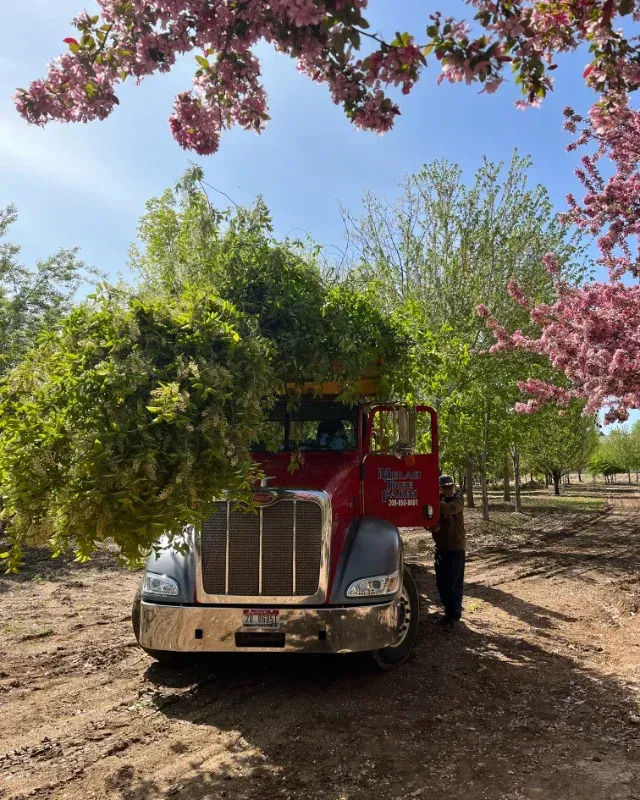
Our farm has good parking for trucks and trailers, making same-day loading simple. Delivery is available for larger orders — ask us about minimum tree counts and our Canyon County delivery radius.
See all the areas we serve if you're coming from Caldwell, Kuna, Meridian, or beyond.
Traffic near Karcher Junction runs heavy. Nearly 50,000 vehicles pass through the interchange daily. Plan your pickup on a weekday if you can — weekends near the District 208 area get busy and add time to your trip. Neighbors in Karcher Estates and the Fieldcrest area can often combine a farm visit with other errands along Karcher Road.
Planting Timing That Works for Nampa's
Growing Season
Nampa's last frost typically falls in mid-May — avoid planting tender stock before then. The two best planting windows for this area are early spring, from March through April, and fall before the ground freezes.
Fall planting works well in Zone 7a because the ground often stays unfrozen through late November. Roots have time to settle in before summer heat arrives. Avoid planting mid-summer — Nampa temperatures regularly exceed 95°F and that kind of heat stresses new roots before they have a chance to establish.
Spring inventory at local tree nurseries fills up fast. Mid-March is when most farms restock, and popular species go quickly once word gets out. If you have a specific tree in mind, reaching out before the season starts puts you ahead of the rush.
Nampa gets only about 11 inches of rain per year. Set up a watering schedule from day one — your new tree will need consistent moisture through its first full growing season. Areas south of Karcher near Lake Lowell can have higher water tables, so ask us about root rot risks if your yard stays wet after rain.
Frequently Asked Questions
Trees are serious, and so are your questions. Here are just a few:
When do tree nurseries near Karcher Junction get spring stock?
Most farms near Karcher Junction restock around mid-March, right before the April planting rush begins. If you have a specific species in mind, reaching out in late February gives you the best shot at getting what you want.
Does alkaline clay soil near Karcher Road require amendments before planting?
Yes — adding compost to your backfill helps loosen clay and hold moisture around new roots. Honeylocust and hackberry are good options if you want species that naturally tolerate the high pH soil common near Karcher Road without heavy amendment work.
Does my HOA near Karcher Junction require a specific tree size?
Many Nampa HOAs require a 2.5-inch caliper tree for front yards. Check with your Architectural Control Committee before you purchase so you arrive knowing exactly what size you need.
Can I plant a tree while Karcher Road construction is happening in 2026?
Yes — planting is not affected by road construction. Use alternate routes to reach our farm and call ahead so we can give you the most current access and parking tips for your visit.
Do tree farms deliver to new subdivisions near Karcher Junction?
Many farms deliver within Canyon County for orders of five or more trees. Ask us about our delivery radius and minimum order when you call — we are happy to walk you through the options.
What is the best fall planting window in Nampa?
September through early November works well for fall planting in Nampa. Zone 7a typically keeps the ground unfrozen long enough to give new roots time to settle before winter sets in.
COMPANY
CUSTOMER CARE
LOCATIONS
NEWS
LEGAL


© Copyright 2026. Melad Tree Farm. All Rights Reserved.